ARTillery by Eli Gross
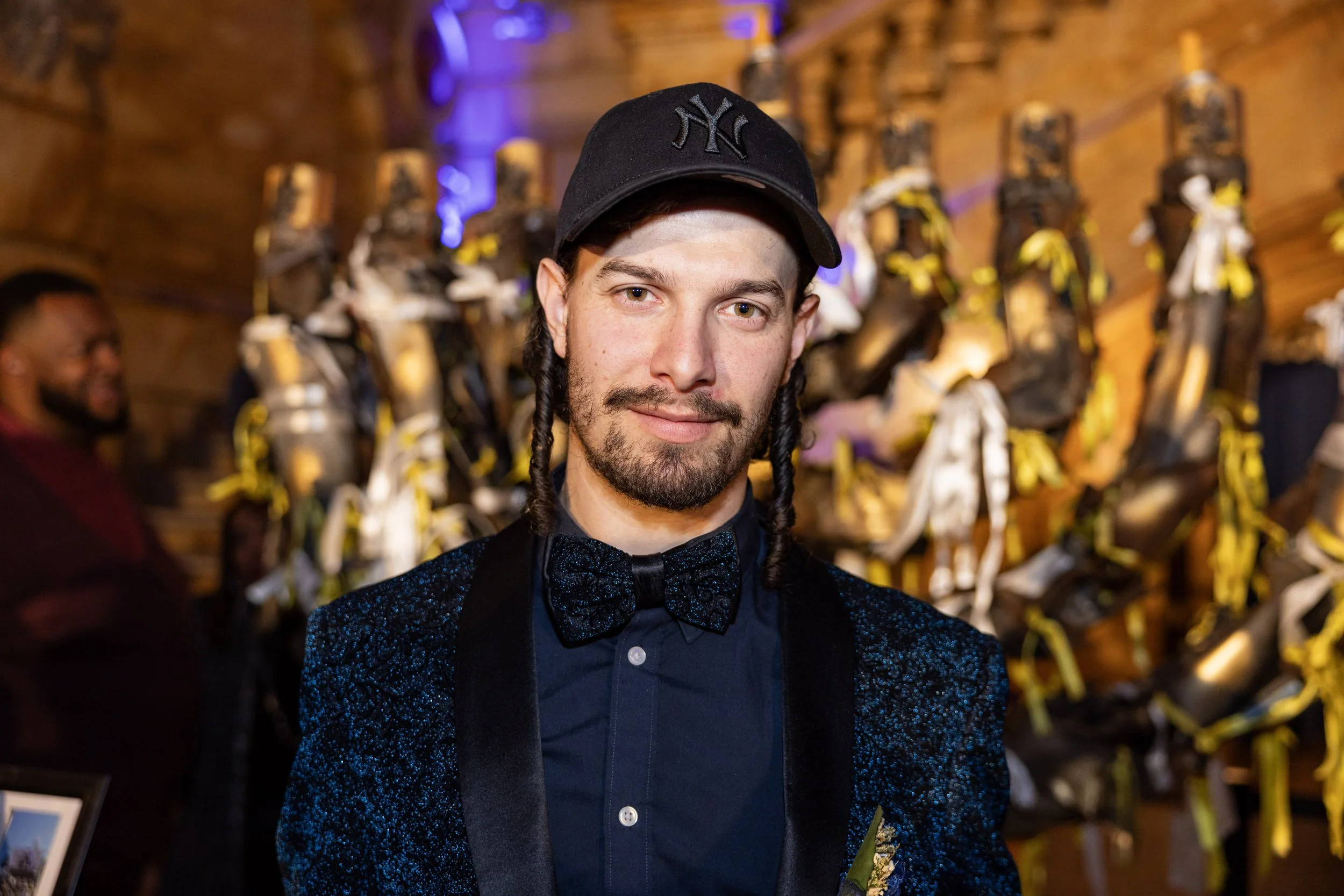
Eli Gross is an Israeli artist born in Jerusalem into a Hasidic family of seventeen children. Raised within ultra-Orthodox educational frameworks, his early life was shaped by tradition, structure, and a strong sense of continuity. At the age of twenty, he completed national civil service and entered the high-tech industry, where he worked in technological roles for approximately seven years.
With the outbreak of the war, Gross was called up for reserve duty and served for over 450 days in a technological unit of the Israeli Air Force, holding significant operational responsibilities over an extended period. During this time, he was exposed to the physical remnants of conflict, including missile fragments and interceptor debris. These materials, originally designed for destruction, gradually came into his possession and became the foundation of his artistic practice.
His engagement with art did not emerge from a prior ambition to become an artist, but directly from an encounter with material. The objects themselves initiated the process. What began as an immediate and intuitive response evolved into a distinct artistic language rooted in transformation.
As the war progressed, Gross created The Menorah of Hope, a large-scale sculptural work composed of metal and fragments of war. Installed at Hostages Square in Tel Aviv, the work became a public focal point throughout 2025. It marked a turning point in his life, after which he made the decision to leave the high-tech sector and dedicate himself fully to artistic practice.
Following this transition, Gross founded ARTillery Gallery and presented a solo exhibition in Tel Aviv, alongside participation in several group exhibitions. His works have since been exhibited across Israel, Europe, and the United States. Working from his studio in south Tel Aviv, his practice explores the intersection of war materials, personal identity, his Hasidic background, and contemporary Israeli reality.
Ahead of Hanukkah 2025, The Menorah of Hope was transported to the United States via diplomatic mail, with the assistance of the Israeli Ministry of Foreign Affairs and the Embassy of Israel in the United States. Originating from Hostages Square in Tel Aviv, the work was lit during Hanukkah at a series of public events in New York, as part of a broader journey intended to bring light and continuity to Jewish communities in the diaspora.
Among these events, the Menorah was lit at an official Hanukkah ceremony held at New York City Hall by then-Mayor Eric Adams. It was also lit opposite the United Nations headquarters, in a ceremony led by Israel’s Ambassador to the United Nations, Danny Danon, together with the sister of Ran Gvili, in a public act of prayer and solidarity.
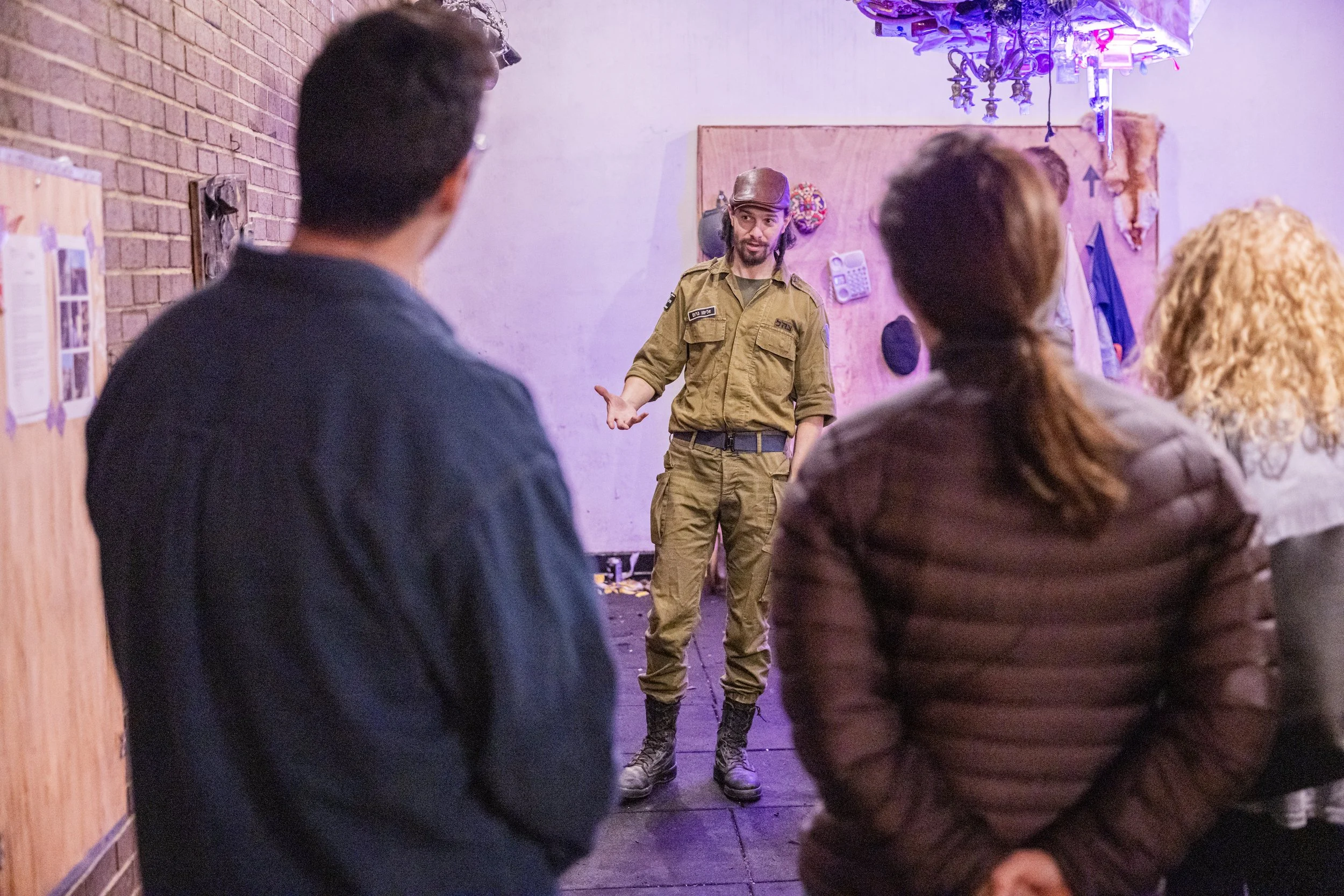
In March 2026, Gross presented his solo exhibition 1956 in Manhattan. The exhibition brought together a body of work tracing a personal and material journey across distinct worlds: Hasidic life, technological industry, prolonged military service, and a complete commitment to artistic practice.
The exhibition examined identity, memory, survival, and continuity through sculpture and installation. Using materials that function as direct witnesses to lived experience, the works created a space in which past and present converge, and where exile, homeland, and hope coexist.
Gross’s work occupies a singular position within contemporary art. While many artists engage with themes of conflict, history, or identity, his practice is grounded in direct material transformation rather than representation. The materials he works with are not symbolic approximations, but physical remnants of real events. Their prior function is not erased, but carried forward into new forms.
Through this process, his works operate simultaneously as sculpture, artifact, and testimony. This direct relationship between lived experience, material, and form places his work in a rare and distinctive position within the current artistic landscape.